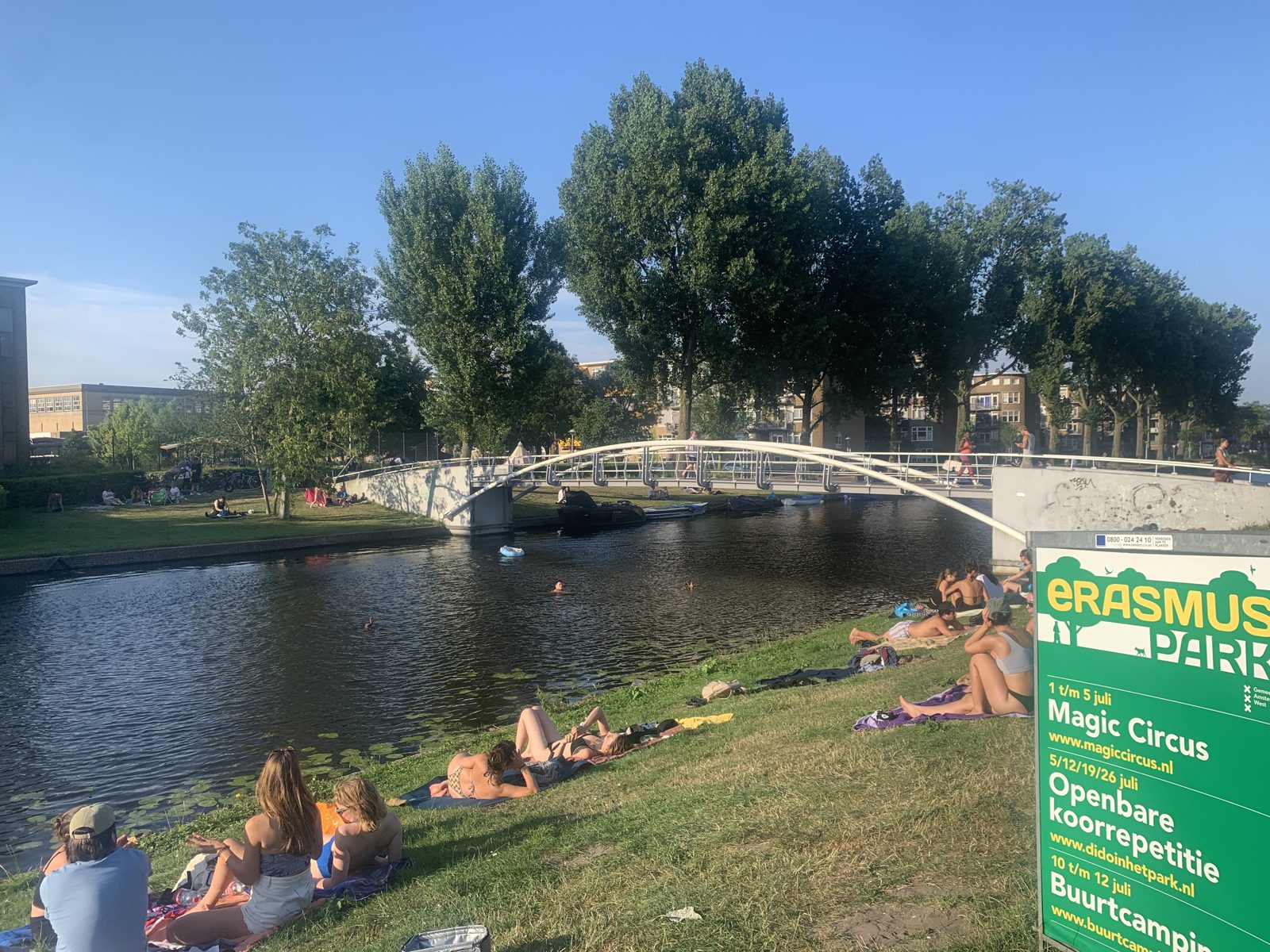
Can you swim in the canals?
Officially: no. The Amsterdam canal ring is a working waterway — boat traffic, moorings, and water that is never tested for swimming. Swimming in the canals is prohibited and fined, except during organised events like the Amsterdam City Swim.
The good news: real swimming water is 15–25 minutes away by bike in almost every direction. Pick a green-status spot above, rent an OV-fiets or shared bike, and you'll be in clean, measured lake water faster than you'd find a canal-side spot to sit.
Good to know
What do the quality statuses mean?
Official swim locations are tested roughly every 14 days during the season (1 May – 1 Oct) by the water authorities. Good means recent measurements met the standards. Warning means an official warning or negative swimming advice is active — often blue-green algae after warm weeks. Not monitored means nobody tests this water; the government advises swimming only at official locations.
Why do you list places that aren't official?
Because you'll find them anyway — some of the busiest water spots in Amsterdam are not official swim locations, and a few even have posted no-swimming signs (Houthaven, Noorderhof Pier). We'd rather tell you clearly what a place is — unmonitored, or outright prohibited — than pretend it doesn't exist. What we never do: invent a quality rating for untested water, or recommend swimming where a sign forbids it.
Where does the data come from?
Quality statuses, warnings and season dates come from the public dataset behind zwemwater.nl, the official national swim-water service of the Dutch provinces, water boards and Rijkswaterstaat. The data is public-domain and free to reuse; this site is an independent English-language guide and is not affiliated with the government.
Blue-green algae — the one thing to actually watch for
After long warm spells, some lakes develop blauwalg (cyanobacteria), which can make you ill. It's the most common reason for warnings in summer. If a spot shows a warning, or the water looks like green paint soup, pick another spot — there's always one nearby with good status.